
Franklin 72-Hour Release Status
No official Franklin County 72-hour release feed, archive, cadence, field set, or online retention period was found. The Sheriff’s official page points toward Caribou detention. The Franklin court page also routes users to Bannock and Cache County jails. A complete three-day question cannot be answered from any one current system.
Ask which facility physically held the person on each date. A name may disappear because of community release, court transport, another contract bed, IDOC commitment, or another agency’s pickup. Keep the releasing facility, event time, release code, and destination together.
Check Franklin 72-Hour Releases
The three-day method favors records over live screens because a released name may already be gone. Set an exact start and end time, then follow the event through the custodians.
- Ask Franklin Sheriff which jail held the person during the window.
- Check Caribou, Bannock, and Cache only when official routing supports that host.
- Request the host’s booking and release event for the stated date range.
- Search iCourt Smart Search for bond, judgment, probation, commitment, dismissal, or warrant activity.
- Check VINE and IDOC when transfer or supervision is plausible.
- Match two identifiers and preserve each agency’s time and destination.
Use the Franklin 24-hour release route when the event is likely from today.
Franklin Three-Day Record Fields
No online list supplies these fields. Request them from the host and use the case number to connect custody with court action.
| Field | Why it matters |
|---|---|
| Name, age, booking number | Prevents a wrong-person match |
| Booking and host facility | Places the custody record |
| Release date and time | Tests the 72-hour window |
| Release basis | Explains bond, order, time served, or transfer |
| Destination | Shows community departure or receiving authority |
| Case number | Links to the Franklin judicial event |
Do not merge three host lists into a homemade Franklin feed. Each record has its own scope.
Franklin Weekend Release Gaps
A three-day range can span court closure, delayed docket entry, and host-interface updates. A court may authorize release before staff finish processing. VINE may report later. Those stages do not share one clock.
No Franklin source promises early Friday release or publishes a weekend-processing rule. Ask for the actual event and whether the destination was community, another county, IDOC, USMS, or ICE. Cache County is in Utah, so an Idaho-only jail search can miss it. Search the Cache roster for custody and iCourt for the Franklin case.
Request Franklin Three-Day Records
Send focused requests. Franklin Sheriff can identify the host and supply arrest or transport records. The host owns its booking and departure event. The Franklin clerk supplies the court order. IDOC is relevant only for state custody or supervision.
State the person, number, date range, and fields sought. For Idaho agencies, § 74-103 ordinarily sets a three-working-day initial response, with written extended retrieval generally reaching ten working days. Cache records follow Utah process.
VINE can preserve an event clue, but it is not the disposition. IDOC’s “In community” and “Discharged [date]” also answer different questions.
The county page documents the outside detention routes.
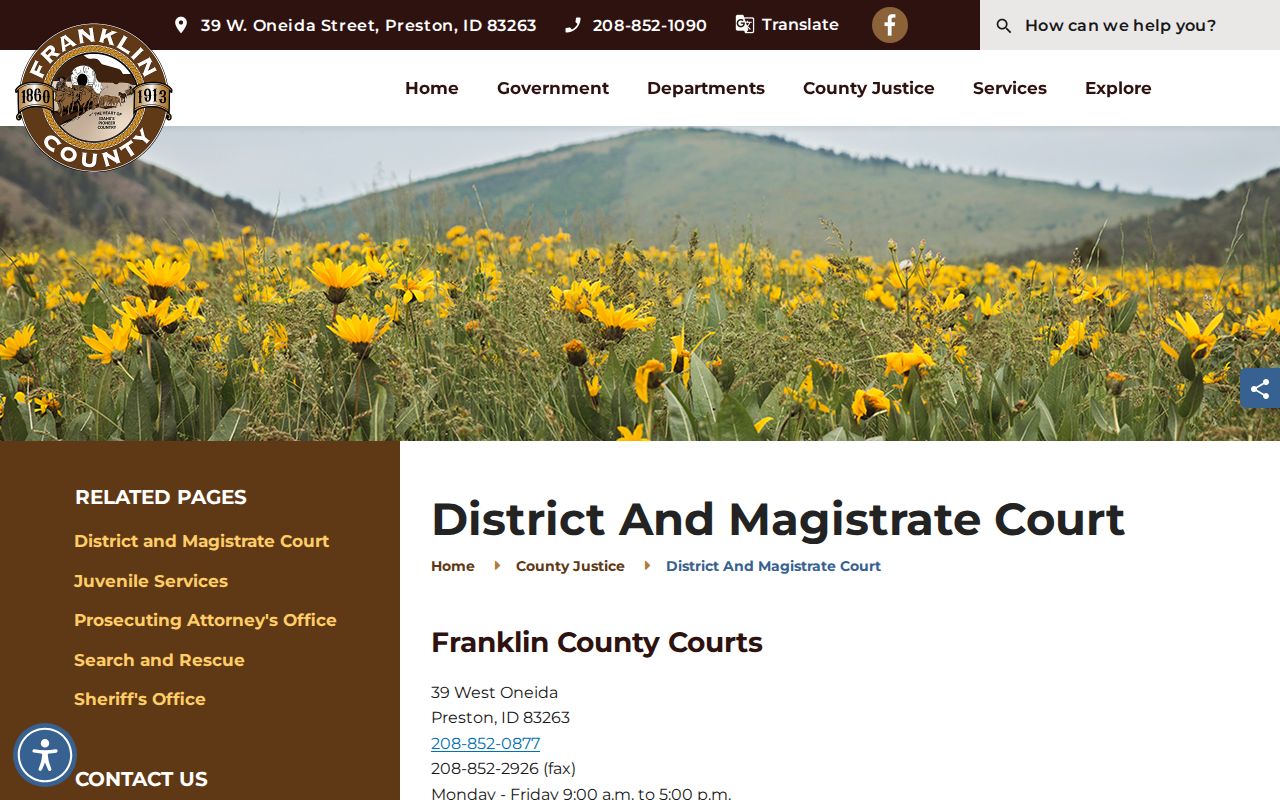
The official page supports a facility-by-facility search, not a countywide three-day list.
Note: Weekend roster absence remains inconclusive until the host confirms the release type and destination.
Franklin Roster Disappearance Is Ambiguous
Franklin’s three-day inquiry is unusual because a detainee may move between contract custodians rather than leave custody. Caribou is the Sheriff’s direct detention route. Bannock and Cache appear on the county court page. IDOC can also place a person in a county jail contract bed while retaining state jurisdiction. Each move can remove a name from one screen without producing community release.
Use a release destination as the key field. “Transferred to IDOC,” “released to another agency,” and “released on bond” describe different outcomes. If the host and court dates differ, preserve both. A judge may sign an order first, jail processing may follow, and VINE may update later.
For a wider historical request, ask for existing log entries rather than a custom list. Include the date range, booking number, and desired fields. If the agency redirects the request, record the new custodian and continue there. This chain is more reliable than assuming Franklin County itself holds every physical release record.
Separate Franklin Host Records
Caribou and Bannock are Idaho county facilities, while Cache County Jail is in Utah. Franklin can retain the arrest and prosecution record as Cache keeps the physical event. A three-day review must not label Cache’s record as IDOC data or assume Idaho VINE received it.
If the destination is IDOC, search by name or IDOC number. “In custody” and “County Jail Contract” are not release. “In community” requires the detail to distinguish probation from parole. Sentence satisfaction may occur after the first day outside prison because supervision can continue.
Federal branches stay separate. BOP covers sentenced federal records. USMS pretrial movement may not appear there. ICE ODLS is useful after the jail identifies immigration pickup. No result from those systems proves community release.
Reconcile Franklin Three-Day Dates
Compare the host event with the Franklin iCourt register. Look for bond, dismissal, probation, judgment, commitment, amended order, warrant, and satisfaction. The docket gives durable legal context but not the precise door-out time.
Keep each date with its source. If two agencies disagree, ask each to correct or explain its own field. Do not overwrite one with another. Withhold a firm release claim until the destination and identity match.
Franklin Historical Release Requests
A three-day request should seek existing events, not ask staff to build a new list. State the start and end time, person, booking number, host, and Franklin case number. Ask for release time, type, destination, and receiving agency. Those fields can establish separate departures across the period.
Online display and records retention are not the same. A name may vanish from a current roster while the underlying event remains requestable. No Franklin source publishes a fixed online retention period, so do not promise that a person will remain visible for 72 hours.
If records conflict, keep the agency labels. A court order can precede jail processing, the jail can log departure before a receiving system posts intake, and VINE can notify after an update. The sequence should be explained rather than collapsed into one unsupported timestamp.